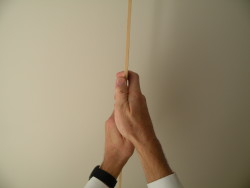
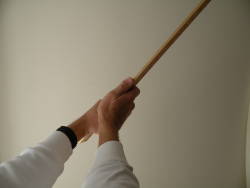
golf course image

Golf Swing Takeaway – How to Make a One Piece Takeaway

“How to make the Golf Swing Takeaway” or “How to make a one piece takeaway” are two of the most commonly asked questions I get on my YouTube channel and here on my website. After grip and setup, the golf swing takeaway is one of the foundational elements of the swing that can ruin the rest of the motion if not executed correctly. Most amateur golfers will make some major mistake in the golf swing takeaway that leads to further swing plane errors in the backswing. This just cascades on into downswing and impact problems. In fact there are still a few misconceptions still taught today that we’ll cover in the remainder of this article. Watch the video here and then check the article below for more detailed instruction on how to make the golf swing takeaway and be sure to leave your comments below.

The Golf Swing Takeaway: Why “Low and Slow” is a Bad Idea

A recurring swing problem we still see that started in the “good ole days” of golf instruction is the mantra, “Sweep it back low and slow.”  Unfortunately this style of takeaway sends the golf club “inside” and beneath the correct swing plane almost instantly. Once the club is too low and too far inside, then the player must recover by lifting the arms and club straight up to get elevation and hopefully get somewhere back near the ideal plane. However, this generally leads to further problems as the player crashes through the plane vertically on the way up and starts a type of “figure 8” loop that then comes over the top on the way back down.

Should the toe be up in the One Piece Takeaway?

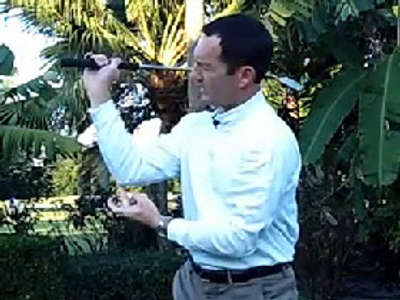
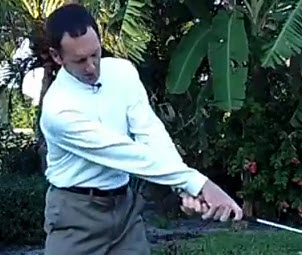
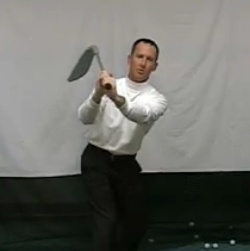
Another popular misconception about the backswing and particularly the one piece takeaway, is the clubface position half way back. It has been taught for years that the “toe” should be straight up at the waist-high position in the takeaway. There is no simple way to say it … this is just plain WRONG! Watch the accompanying video on this page as I demonstrate how a proper one piece takeaway with no hand, wrist or forearm manipulation will send the club moving straight back onplane with the face tilted slightly downward at the waist-high position. The clubface in a proper one piece takeaway will appear slightly “closed” with a 10-15 degree tilt downward.

If the toe is straight up you have technically begun to “fan the face open” which is a manipulation of the hands,wrists, forearms and could be the sole source of your swing plane, clubface, casting and slicing issues. Scary, isn’t it? Who would have thought that many problems could result from one little takeaway error.

Other Golf Swing Takeaway Mistakes to be Avoided

  • Picking the club up to the “outside” – this sends the club above plane and likely “laid off” at top of backswing
  • Early wrist set – this can be achieved but is dangerously difficult to keep the club on plane
  • Bowing the lead wrist – this will close the face prematurely and often send the clubhead too far inside while the hands themselves move outside

What are the keys to look for in a good takeaway?

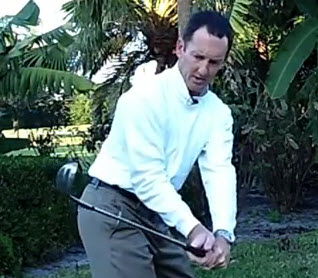
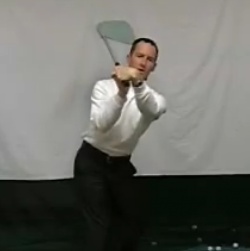
So the secret to developing efficiency and repeatability in the swing is to start the golf swing takeaway online, going straight back and in one piece. The arms and club move as a single unit. Think of the arms as a solid triangle and with the club attached to that unit in the center of the stance, the arm/club unit now forms a large capital letter “Y.” The goal is to swing the “Y” back without anything bending or rolling until the club is parallel to the ground and the shaft is in a straight line roughly over the players toes.

A few final points of distinction to make are that the lead wrist (left wrist for right-handed golfer) will be “cupped” in the setup and takeaway and that the wrist does not hinge into a “flat” position until the latter part of the backswing. This surprises many golfers as it is well known that we advocate a “flat left wrist” in the golf swing. Note however that we swing into that position; we don’t start there. So the lead wrist is cupped at the start, still cupped at waist-high, and then as the swing rises above the waist-high position the flat left wrist will then come into play. Watch the YouTube Video on this page for all the key moves in the Golf Swing Takeaway and learn how to make the perfect one piece takeaway for your best golf ever.
Right Wrist Action for the Perfect Golf Swing

There is plenty of information on wrist action in the golf swing, including information here on this blog, but most of it deals with the movement of the left wrist or left side in the golf swing. However, this online golf lesson article and accompanying video are dedicated completely to the movement of the right side throughout the swing, specifically the right wrist action for the perfect golf swing with details on 5 key positions to check. Watch the video then check the article below for more detail and photos of some of these 5 key positions.

Step 1: Right Hand Golf Grip – Accent the Trigger Finger

For the right-handed golfer who desires to strike iron shots with a piercing flight and get a divot after the ball, it is imperative to create the right grip positions and consequent wrist positions. Start with a relatively strong left hand grip in which the “V” of the left hand points to the right shoulder, but place the right hand so it covers the left thumb in a more neutral overall position.

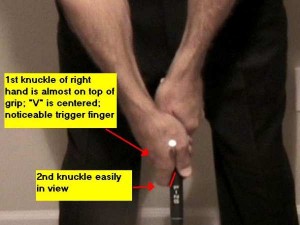
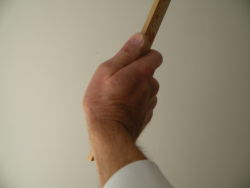
Right Hand Golf Grip
Right Hand Golf Grip w Trigger Finger

The right hand “V” will point straight up toward the chin, and the secret is accenting the forefinger position so it looks like a “trigger finger.” Going further, be sure the first joint segment of the finger is pressing into the side of the club in a manner that slightly puts the first knuckle on top of the handle as pictured here. The trigger finger will maintain side pressure on the handle from start all the way to impact.

Step 2: Backswing Takeaway – Dorsiflexion Past Right Thigh

The takeaway actually starts with no wrist action at all. It should be a one piece move that is best performed by letting the right shoulder blade begin moving back.

Dorsiflexion of Right Wrist in Golf Backswing
Dorsiflexion of Right Wrist

This starts a pulling of the right arm and hand as the club is delivered in a “one-piece” move like handing off a football.

Once the hands move beyond the right thigh, the right wrist will start bending back which is classified as “dorsiflexion.” This bending back of the right wrist creates the corresponding “flat left wrist” that is so well known in golf instruction.

Step 3: Right Arm Folds – Tray of Dishes at Top of Backswing

As the backswing continues to progress beyond the right thigh area and the wrist bends back, the right elbow will start to fold. The right elbow actually does not travel very far in a good backswing. It simply folds and points toward the ground as the right palm faces the sky in the classic “waiters’ tray” position at the top.

Right Wrist Position at Top of Golf Backswing
Tray of dishes at top of swing

A couple of key points must be noted in this top position. The weight of the shaft should be resting on the trigger finger, not the thumb. Also the right palm will slightly face away from the player to the right. If the opposite is true,  club resting on the thumb and palm facing the player, then the clubface will be too open and casting is inevitable on the downswing.


Step 4: Downswing Drops in the Slot with Right Palm Down

As the downswing starts, the right arm and shoulder simply drop straight down as the feet press firmly into the ground and the knees make a slight lateral shift. There is no body turn at this stage – the right arm can’t drop straight down if the chest starts turning.

Golf Downswing Pre-Impact Position by Herman Williams Golf
Pre-Impact Position – Right Palm Down

This straight down drop is what stores the lag angle at right elbow and right wrist as the club drops on plane into the slot half way down. The secret at this stage of the swing is to feel the pressure against the right hand trigger finger as the right palm faces down at waist-high. From the top of the backswing it feels like hitting your right thigh with the heel of your right hand while your right wrist stays bent all the way back.

At this waist-high downswing position of the hands, the butt of the club should point at the golf ball, toe of club points upward (but not quite straight up) and right palm is facing the ground, or more technically faces the ball on the ground.

Step 5: Impact and Release in the Golf Swing

Prior to this last step, all efforts have been made to store as much lag and backside pressure on the shaft as possible  while keeping the shaft on plane and keeping the clubface square to the swing path. We’re basically at pre-impact just off the right hip with full wrist hinge, right palm down with the shaft hooked by the trigger finger.

Now it’s time to explode. As the hips start to clear and left leg straightens, the right arm will literally unhinge and straighten in a manner similar to driving a nail. Both the right elbow and right wrist straighten. This restores both arms to their full length through the impact zone. If you think about the right arm motion now at its completion, you’ll see the similarity to the nail driving example – grip the hammer squarely for good contact, hinge the wrist and elbow which is our backswing fold, then extend to make solid contact which is our release point.

Golf Swing Release Position by Herman Williams Golf
Overhanded Release Position – Right Over Left

This proper release action requires the right arm to overtake the left arm as it races past and rolls over the left. Hence we describe this as an “overhanded” release in which the right palm continues to face down as it goes past the golf ball. A good image is to try to point the toe of the club at the target as the club exits the impact zone. This sounds like it would hook the ball, but it really works perfectly if you had the proper grip and lag all along.

The result should be a swing which bottoms out beyond the ball with irons to create the proper divot and simply rips the cover off the tee shots with the driver. Watch the video and see if you can get the right wrist action for the perfect golf swing.

Then let me know what you think in the comments section below. Did you pick up more distance, start taking a better divot, kill your slice? Let me know.

2013 Masters Practice Round Video – Tiger Woods, Rory McIlroy and More

Great slow motion golf swing video of Tiger Woods, Rory McIlroy, Dustin Johnson and others is here. Just got back from the 2013 Masters Practice Rounds. What a great time at Augusta National. The weather was a perfect … 80 degrees by mid afternoon, sun was out in full and no wind to contend with. Just a great day to be playing golf or watching golf.

I was able to get some great video footage of top players like Tiger, Rory, Bubba Watson, Dustin Johnson, Rickie Fowler, Hunter Mahan and many more. Almost all of the golf swings are filmed in super slow motion at 120 frames per second so you can really get the detail of what is happening in their swings.

There is also footage of different parts of the course and something unique this year – I was able to get down to the 16th hole and film a couple of players skipping shots across the pond at the par 3. This is an annual ritual in the Masters Practice Rounds and the crowd really gets involved. In fact, it’s kinda funny … the biggest roars all day in the practice rounds are when a player gets the ball to skip all the way across and onto the green.

I also managed to get footage of the youngest player to ever play in the Masters, 14 year-old Tianlang Guan of China. He played his practice round with none other than Tiger Woods and Dustin Johnson. What a contrast … the 2 longest hitters out there playing with the youngest guy in Masters history. It was quite a show.

I’ll put together a full list of players I filmed as I get more time and eventually hope to post individual links to their swings so you can just go look-up the player you want to watch. Until then, enjoy this 30-minute YouTube Video of the 2013 Masters Practice Rounds. – Herman


Golf Swing Video – Masters Practice Rounds 2012

Just finished my annual trip to Augusta for the Masters Practice Rounds. Got some great golf swing video of many top players including Tiger Woods, Gary Woodland, Webb Simpson, Adam Scott and many more. Watch the video below for an early look at the 2012 Masters before Tournament coverage begins on Thursday.

Weight Shift in Golf Swing – Pivot Then Shift

The weight shift in the golf swing is a largely misunderstood concept. After all, how is one supposed to keep their head still, shift weight and stay behind the golf ball all during a swing that takes less than a second and a half to complete?

Fortunately, this online golf lesson article and the subsequent video golf lesson at the end will clear up all the mystery behind the proper weight shift in the golf swing.

It all starts with setup. Obviously the golfer is bowed forward with the chest somewhat over the ball, buttocks stuck out behind the heels counterbalancing the forward leaning chest. Weight is distributed evenly left and right and sits through the middle of the arches on the feet. In addition, the upper torso is leaning away from the target because the trailing hand and arm sit lower down the handle of the golf club. So to put it simply, bow forward and lean right if you are a right-handed golfer. Also notice your head will be behind the ball.

Golf Swing Weight Shift in Backswing

Backswing Pivot - Golf Swing Weight Shift
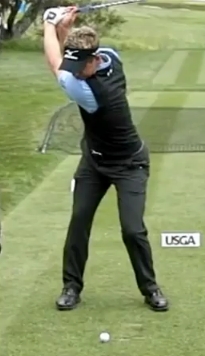
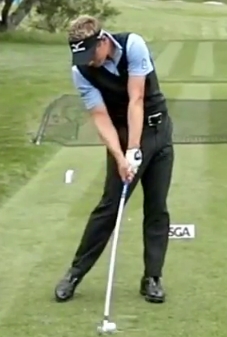
Luke Donald - Backswing Pivot Head & Chest Over Rt. Foot

Now it gets tricky. If you try to “shift” weight to the right in the backswing, you will likely slide your hips over to the right while trying to keep your head still. Your core will have moved out from under your head, and your upper body will be tilted the wrong way – back toward the target. The spine angle has literally reversed itself.

You see, the term “shift” is all wrong for the backswing. “Pivot” is a better term. The right hip will pivot back like sitting back in a chair and then around – actually coiling back toward the target slightly, not drifting sideways to the right. The right foot will stay braced on the instep, and the leg will remain leaning inward like a ball player braced to push off for a throw.

This pivot motion with the hips also involves coiling the trunk around the spine – this is not the same as turning around a still head. If you coil correctly around your spine, which was bowed forward and to the right at address, your chest and head will naturally flow to the right.

Remember your spine is located along the rear of your trunk so your chest, head and eyes are located out in front of the spine. Spine stays still and turns while sending head, chest and eyes to the right. This moves the weight of your chest and head over your right foot and creates the correct golf swing weight shift sensation in the backswing.

This lateral movement of the head is minimal, probably 1”- 3” for most golfers, nevertheless there is movement. Bottom line, do not attempt to keep your head perfectly still while sliding your weight to the right. You will get a reverse spine tilt in the backswing that sends your downswing over the top and casting, or you will overcorrect the spine tilt back to the right in the downswing so hard you throw the club in the ground.

Golf Swing Weight Shift in Downswing

Luke Donald Impact - Golf Swing Weight Shift
Luke Donald - Golf Swing Weight Shift to Impact Belt Buckle Past Ball

With the backswing pivot clarified, what do we do with weight shift on the downswing? It’s pretty simple actually. From the correct backswing position with the upper torso leaning away from target, all the player has to do is shift (yes, now it’s time to shift) the left knee and hip targetward as the downswing begins … actually both knees shift targetward.

This first move in the downswing is lateral, not circular or rotary, often cited as “clearing the hips.” Imagine leaving your back facing the target as your hips shift toward target. The hip clearing will gradually kick in a moment later as the arms lower to the waist-high area and the majority of weight has arrived on the front foot. At impact the golfer’s belt buckle will have shifted well left of the golf ball and will have begun turning left. The hands will also preferably be past the ball on all shots but the driver.

There you have it. Coil or pivot in the backswing, keeping the hips in a barrel as the old golf instruction cliché states. Be willing to allow the upper body to tilt to the right as the head likely drifts slightly to the right in backswing. Then blow out the left side of that barrel as the hips shift first, then clear on the downswing. The armswing will benefit by easily getting back well inside the ball in the backswing, then dropping in the slot on the downswing. No more over the top downswings or falling back off balance in the finish.

So what do you think? Are you willing to pivot the hips and let your head drift back in the backswing to develop a better weight shift and more repeatable downswing path with more power?

Watch the video golf lesson below, then try it out and leave your comments at the bottom of the page. Don’t forget to share this with your friends.

Herman


How to Stop Shanking the Golf Ball

To stop shanking the golf ball, one must first understand what golf swing flaw is causing the shanked shots. In this golf lesson article and subsequent video by Herman Williams, PGA Professional in Raleigh, NC, we will discover both the causes and the cure for the shank.

First, a definition. A shanked golf shot is simply a shot in which the golf ball has struck against the inside corner of the heel of the club where the clubface joins the neck or hosel. This causes the golf ball to ricochet violently offline – to the right for right-handed golfers, left for the lefties.

Occasionally if you are really lucky the ball will make perfect contact with the front of the hosel where the shaft goes into the neck and the ball will go straight, but it will be a grounder as the blunt strike just beats the ball along the ground. If you’re not so lucky you may catch the golf ball toward the back of the hosel and have the ball fly right through your legs – kind of embarrassing when other golfers are behind you.

Lastly there is the rapid double-hit. Some shanked shots will ricochet off the hosel headed dead right only to be struck again by the toe of the clubface as it flies by – these shots exhibit a weird corkscrewing ball flight that still goes right but not straight out of bounds like the traditional shanked shot. The double-hit can be verified with impact decals on the face as you will see an impact mark on the heel and the toe from the same shot. However, it happens so fast you cannot hear or feel the double hit.

Most golfers think the shank and its violent, clanky offline flight are caused by an open clubface. However that is almost NEVER the case. In fact for most golfers the face is actually closed when the ball makes contact with the neck or hosel. The ball first contacts the rounded, angled portion of the inside of the neck and starts flying offline before any true contact with the flat clubface can be made.

So we know the face is not open and the ball flies dead right due to striking the neck. But why did it hit the neck?  Well there are 3 primary causes. Two related to swing path, one related to hand and wrist action. [A 4th possibility is caused by losing balance with the body drifting toward the ball in the downswing, but we will stick to what the club is doing in this article. If your body is diving toward the ball, try to keep your weight centered over your feet – avoid extreme toe or heel weighting.]

What Causes a Shank?

Shank Cause #1
Severe in to out swing path. This is a path in which the clubhead sinks or falls behind the player on the downswing. As speed and momentum build up, the club literally flies from coming down behind the player to going outward through the impact zone. The club stretches away from the player in the hitting area and eventually reaches too far away and shanks the ball. A right handed player with this swing style will appear to swing to the right of the target, usually draws the ball naturally but pushes it often and has a high finish.

Shank cause #2
Severe out to in swing path. This swing path puts the club outside over-the-top of the swing plane during the downswing. As the downswing gets under way, the speed of the swing continues to build and centrifugal force sends the clubhead out past the golf ball well before it arrives in the hitting area. Even though the player attempts to pull the club back across the ball, it is rarely enough, and the hosel collides with the ball and shanks it. This player usually hits fades or slices along with pulls and has a finish that appears left of target and low with the arms down around the body.

Shank cause #3 is much more subtle.
The player with this 3rd category of shanks often appears to have a technically sound swing. The shank comes out of nowhere and is a mystery to everyone watching as the swing looks good to the naked eye of the casual observer. This 3rd category of shank involves casting and or incorrectly rolling/scooping with the hands and wrists prior to and thru impact.

During the downswing, ideally the wrists will be fully hinged 90 degrees or more and this hinge will be preserved well in to the downswing to or beyond waist-high. Assuming the player can get to a waist-high downswing position with full wrist cock intact, it’s what happens next that is so important.

The back of the left wrist must rotate down (supination) as the right palm also rotates down (pronation.) But this must happen without the shaft being kicked offline in an outward direction. In other words, for the right handed golfer the right palm must be looking down and driving the club shaft along the toe line. If the right wrist gets in a bind half way down and kicks outward to relieve the pressure, it will shove the clubhead out off the intended path and shank the ball.

To prevent this problem it is imperative to have a neutral to weak right hand position that will not tend to get underneath the grip & club shaft in the  downswing and eventually scoop or shove the shaft outward. The weaker right hand will allow the palm to stay on top facing down while pressing the shaft down and keeping lag pressure along the back of the shaft all the way to impact.

Once you’ve learned to create a neutral to weak right hand grip, bend it with dorsiflexion in the takeaway and backswing to “support the tray of dishes” at the top. Then bring the club down with the right palm facing down for right handers. Keep that wrist bent back all the way to the hit. No scooping allowed.

For the shanks caused by swing path, simply put a box or headcover along the outer edge of the target line about one inch outside the ball and hit shots without hitting the obstacle. You can even create a gateway to hit through by placing a spare golf ball to the outside of the ball in play and then put another ball to the inside. This looks and feels like swinging thru a goal post and really sharpens the focus and the feeling of returning the clubhead on the proper path.

Herman Williams

Check out the following video to see the causes and cures for the shank first-hand. Be sure to comment.

Flat Left Wrist at Top of Backswing – Golf Swing Lesson

In golf a flat wrist at the top of the backswing is a very important concept to master. This online golf lesson is dedicated to explaining the backswing and particularly the concept of a flat wrist. For a right-handed golfer this will be a flat left wrist at the top of the backswing.

A solid, flat left wrist in the backswing of the golf swing assists with keeping the golf club on plane, keeps the transition from getting loose, helps stop over swinging and most importantly helps the golfer hit straight golf shots with consistent, controlled trajectory. Read on for a full explanation and don’t forget to watch the video at the end and leave your comments.

Golf Backswing: Flat Wrist at the Top

There are so many possible angles and wrist positions in a golf swing, we first need to clarify what these are and what the desired backswing position looks like. By definition the flat wrist position at the top of the backswing for a right handed player involves having the left forearm, left wrist and back of left hand all in alignment as if a ruler were strapped to the arm like a splint while the wrist is hinged or cocked approximately 90 degrees. Assuming the golfer has a neutral golf grip, the leading edge of the clubface will also be in the same plane as the back of the left hand. See “Top of Backswing” photo upper left.

The difficulty of getting into this flat wrist position in the backswing for most golfers is due to the hinging of the wrists and rotation of the forearms during the takeaway and backswing. The wrists can hinge in four directions and the forearms can rotate back and forth in two directions. In layman’s terms the wrists hinge or cock up and down and hinge back and forth while the forearms can also roll back and forth. These movements can get pretty mixed up if not trained correctly or if simply left to whatever the player deems comfortable. In fact to further complicate things, we want a flat left wrist at the top of the backswing and impact, while at the start of the golf swing the left wrist is actually slightly cupped.

Don’t get confused yet. Let’s get the layman’s terms, medical terms, and golf terms all defined so the language doesn’t sidetrack us. I’m using a yardstick in the photos instead of a golf club since the flat sided yardstick will reveal more detail about the positions. Try it; it’s good for working on the grip also.

___________________________________________________________________________

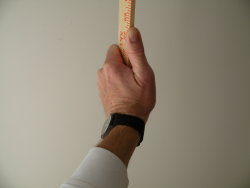
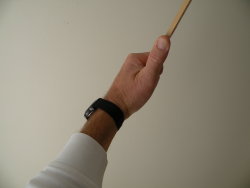
Cupped left wrist in golf
Cupped left wrist – dorsiflexion

Cupped left wrist. Medical term is dorsiflexion with knuckles bent back toward watch face. Notice flat face of yardstick faces up “adding loft.”

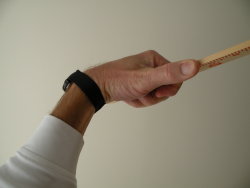
Golf Backswing - Cupped Wrist at the Top
Cupped wrist at top of backswing with Open Clubface

Generally causes an open clubface at top of backswing with toe pointed down, followed by  casting and scooping at impact with high weak slices unless the player is able to manipulate the wrist back into a flat position on the downswing. Note Ben Hogan went from cupped wrist at the top to flat or bowed at impact, but it is a very difficult, advanced move for most, and he was trying not to hook.

____________________________________________________________________________

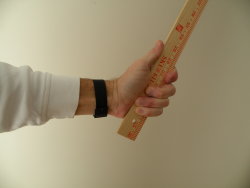
Bowed left wrist in golf
Bowed left wrist – Palmar flexion
Golf Backswing - Bowed left wrist at the top
Bowed wrist at top of backswing with Closed Clubface

Bowed left wrist. Medical term is palmar flexion with palm bent in toward inner forearm.

Generally creates a closed clubface facing the sky at top of backswing. Club tends to get laid off and too flat on downswing. Shots are usually low and/or hooked unless the player manipulates the wrist and clubface back open on the downswing, in which case blocked shots become prevalent.

_____________________________________________________________________________

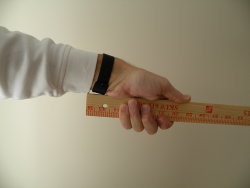
Flat left wrist in golf
Flat Left Wrist

Flat left wrist with slight palmar flexion considered good for top of backswing & impact position.

Back of hand, forearm, watch face and leading edge of yardstick are all “flat” in the same plane. With a neutral grip, this would yield a perfectly “square” clubface with the leading edge of the face in alignment with the back of the hand at top of backswing and impact.

______________________________________________________________________________

Dorsiflexion of right wrist in golf
Dorsiflexion of right wrist

Bent right wrist. Medical term is dorsiflexion.

Good position at mid backswing, top of backswing and pre-impact area.

_____________________________________________________________________________

Wrist cock in golf
Wrist Cock – Radial Deviation

Left wrist cocked or hinged. The medical term is radial deviation of the wrist with the thumb being hinged toward the radius bone along top edge of forearm.
Good wrist position for mid backswing to top of backswing as full wrist hinge is desirable while keeping a flat wrist.

_____________________________________________________________________________

Wrist unclocked - ulnar deviation in golf
Wrist uncocked – Ulnar deviation

Left wrist cocked down or unhinged. Medical term is ulnar deviation of the wrist.

Position is similar to wrist position at impact.
This impact wrist position is not a conscious act. Centrifugal force and the weight of the swinging club will unhinge the wrist and bring it down into impact.

_____________________________________________________________________________

Neutral Golf Grip
Neutral Grip

Player’s view of neutral grip in setup position centered in front of body.

Notice cupping in left wrist. Right wrist is more cupped than this on an actual golf club.

_____________________________________________________________________________

flat left wrist - bent right wrist in golf
Flat left wrist / Bent right wrist

Flat left wrist / Bent right wrist

Mid backswing view just above waist high of wrists – flat left wrist starting to hinge with slight palmar flexion, bent right wrist hinging with dorsiflexion.

These wrist positions will be maintained through the top of backswing and downswing to impact.

__________________________________________________________________________

How to get the flat wrist position.
As the takeaway starts, the club and hands move back the way a quarterback hands off a football … this is the classic one-piece takeaway, nothing has happened at the wrists yet. As the hands get beyond the right thigh, the right wrist begins to bend backward or to the right known as dorsiflexion and the left wrist begins to flatten known as palmar flexion. The left wrist is virtually flat already at the half way point in the backswing.

The final motion to the top of the backswing involves a slight increase in left wrist hinge (upward wrist cock or radial deviation) while also rotating the forearms to the right. This wrist cock or radial deviation must happen without losing the previously attained flat wrist position.

This is where most golfers fail. As they add more wrist cock, or radial hinge, they tend to cup the left wrist which alters swing plane and clubface position. When done correctly, the right wrist is bent back so it feels like a tray of dishes could rest in the palm of the right hand at top of backswing. This is maximum dorsiflexion for the right wrist while keeping left wrist flat and fully cocked. Now the wrists are loaded for a powerful onplane delivery to impact with a square clubface and proper effective loft at impact.

Try this and you should see improved accuracy, a better divot  and more consistent trajectory. If you are looking for private golf lessons, click here to book a golf lesson.

Article Authored by +Herman Williams

Masters 2011 Practice Round Pt 3 – Charl Schwartzel, Lee Westwood, Angel Cabrera

Part 3 of 3 videos covers the afternoon action from the Monday Practice Round at the 2011 Masters. Herman Williams, PGA Teaching Professional, in Raleigh, NC was at Augusta National first thing Monday morning to capture the action and golf swings of the top golfers in the world as they navigated their way around Augusta National.

An added bonus this year is slow motion video with face-on views of Jhonattan Vegas and Angel Cabrera at 10 tee and great down the line (DTL) views of players at number 1 tee including long-hitting European Tour star and eventual 1st round co-leader Alvaro Quiros. Other featured players in Part 3 include Carl Petterson, Lee Westwood, Mark O’Meara, Louis Oosthuizen, Bill Haas, Edoardo and Francesco Molinari, Charl Schwartzel, Bo Van Pelt … but sorry no Tiger Woods, Phil Mickelson or Ernie Els – unfortunately they did not show up on Monday. Some additional footage shows the practice range, short game area and putting green with a great view of Robert Allenby practicing soft bunker shots to stop the ball on the speedy greens at Augusta. So click below and follow Herman Williams, PGA Teaching Professional, as he leads you through the afternoon on day one at the Masters Practice Rounds.

Herman Williams Golf